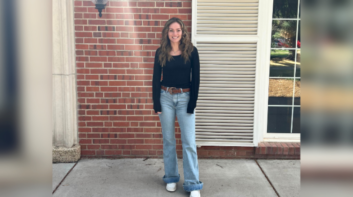


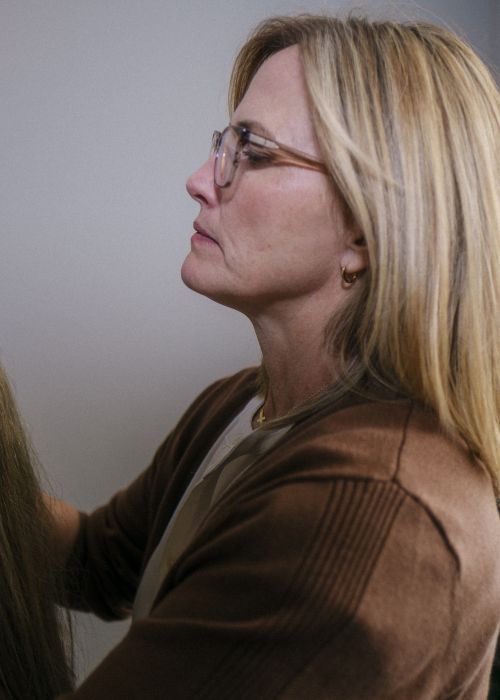

Early in 2026, Amie Rybacki made an unorthodox decision for physical therapy practice, transitioning it to a fully cash pay model. Now she’s wondering what took her so long.
In an interview with IW Features, Rybacki said her decision to stop working with insurance providers had been a long time coming. Her practice, Rybacki Physical Therapy, located in Somerset, Wisconsin, offers niche physical therapy which takes at least an hour or more per appointment. Yet insurances like United Healthcare paid her a flat rate of $81 regardless. Eventually, she was losing money from clients who paid via their insurance plans.
“The way that United Healthcare and some other insurances would reimburse, they don’t care if we see people for 10 minutes or if we see them for two hours, they’re gonna pay us $81. And that’s for my overhead, my rent, my front office staff, my therapist. I did appeal it several times, and I gave all of my explanations of the specialty level of work I do. They just don’t care. It’s a really frustrating field,” Rybacki explained.

After transitioning from the insurance pay model, Rybacki has found her practice less complex and expensive. The only real downside is that some people can’t afford her out-of-pocket price. Yet Rybacki said she always seeks to meet her clients’ financial needs.
“With the specialty work that I do, I’m very aware of people in the Twin Cities that do that who do take insurance. So first and foremost, I recommend people go there, and just connect them and try to fill in the background. But if there is ever a conversation that we’re having, and if it just feels like something that we can offer a discount on, while it’s not something I advertise, because I’m so small, I can do those things,” she said.
With that said, Rybacki believes that most people aren’t saving as much money as they might think by using insurance. High deductible plans often barely cut prices for consumers anyway, she explained.
On the other hand, Health Savings Accounts are often more consequential in actually lowering costs for patients, and Rybacki said her patients often use them to pay for her services.
The website for Rybacki’s practice transparently lists her rates, unlike most medical offices, which treat first and then send patients surprise inflated medical bills weeks or even months later. Rybacki and her coworker, Anna Lucht, offer appointments either 1 hour or 2 hours long with lower rates for follow-ups than for initial evaluations.
Rybacki has also noticed that patients who seek care at her office have more “skin in the game” because they are paying directly out of their own pockets.
“I just feel like patients are more invested in their care, and we work together a little bit better versus us just trying to make recommendations and hope they do what they should do,” she said.
At her practice, Rybacki focuses on “wellness” rather than “sick care,” she said. The difference has to do with correcting habits and imbalances that are leading to painful symptoms, rather than simply alleviating the painful symptoms while never addressing the root cause. Her practice performs a form of physical therapy known as fascial counterstrain, which addresses how challenges to the nervous system may be causing tightness and pain, even if it seems completely unrelated.
“We think everything has to be direct, and we have to stretch tight things, but actually, your nervous system is governing everything, and the reason things are tight is because the nervous system is telling it to be tight,” Rybacki said. “So we’re just trying to figure out the why and the where. We’re releasing it with these different techniques.”


At her practice, she has helped people of all ages — from newborns to the elderly — and treated cases of chronic pain, anxiety, gastrointestinal distress, and constipation. Rybacki said she believes the body is designed to heal itself, and that when it is not doing so “it’s because something’s stuck somewhere.”
“Any dysfunction we have going on in the body has a nervous system dysregulation behind it,” Rybacki explained.
Rybacki said patients shouldn’t be intimidated by out-of-pocket practices like hers. After all, the more consumers and medical providers opt out of insurance, the more likely insurance companies will reform, she said.
But it’s employers who have the chance to make the biggest difference, since most people get their insurance through their work anyway. More employers should be willing to consider a Health Savings Account-type model, where both employer and employee can put money into an account that is tax exempt.
“There are some people who are thinking and working outside the box. And the more that happens, the more the big systems might consider change,” Rybacki said.